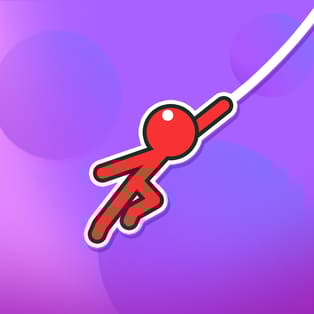
Stickman Hook
Stickman Hook is a fast, physics-driven swinging game where one clean tap can turn into a perfect flight—or a funny crash. You control a nimble stickman with a grappling hook, building momentum through short obstacle courses filled with ramps, hazards, bounce pads, and tricky angles. The core challenge is simple: time your hook, release at […]
- Developer
- MadBox
- Rating
- 4.4
- OS
- Web
- Category
- Arcade











Play Stickman Hook Online
Stickman Hook is a fast, physics-driven swinging game where one clean tap can turn into a perfect flight—or a funny crash. You control a nimble stickman with a grappling hook, building momentum through short obstacle courses filled with ramps, hazards, bounce pads, and tricky angles. The core challenge is simple: time your hook, release at the right moment, and keep your speed without losing control.
What makes the game so replayable is how it rewards rhythm. Levels are quick, the movement feels elastic and responsive, and the difficulty ramps up naturally as new obstacles appear. With the latest update adding online multiplayer, Stickman Hook also becomes a race: you can compete against real players in rapid runs or set up private lobbies to challenge friends.
How swinging works (and how to play)
The controls are built around one action: hook and release. Your stickman automatically moves forward, and you use the grappling hook to swing around anchor points and carry speed across gaps.
- Desktop: Hold the left mouse button or press and hold Space to hook. Release to let go and launch forward.
- Mobile: Tap and hold to hook. Lift your finger to release and fly ahead.
Even though it’s “one-button,” the depth comes from timing. Hooking too early can kill your speed; releasing too late can send you into a wall or straight into a hazard. The best runs look effortless because they’re built on consistent release timing and smart hook selection.
Level design, obstacles, and progression
Stickman Hook features 100+ levels designed as compact momentum puzzles. Early stages teach the basics—simple arcs and safe landings—then introduce tighter gaps, low ceilings, sharper turns, and sequences where you must chain swings without hesitating.
As you progress, you’ll encounter mechanics that change how you approach a swing:
- Hook points placed at different heights to force high arcs or low speed runs.
- Bounce pads that boost you upward or forward, often enabling shortcuts.
- Hazards and tight corridors that punish late releases and wide swings.
- Occasional “bouncy” terrain that can create massive combos when you keep your momentum.
The game also hides small visual surprises. Revisiting earlier levels or switching skins can sometimes make the environment feel slightly different, which adds charm without changing the core physics.
Multiplayer races and competitive runs
The multiplayer update adds a fresh layer of tension: you’re not only trying to finish—you’re trying to finish cleaner than other players. In races, a single missed hook can be the difference between first place and watching opponents swing past.
Multiplayer is especially fun because it highlights decision-making. Risky shortcuts may pay off, but consistent lines often win over time, particularly on levels with tight timing windows.
Skins and customization
As you complete stages, you unlock a variety of cosmetic skins—from ninjas and animals to silly options like food-themed characters. Skins don’t change your stats or physics, so the gameplay remains fair in both solo and multiplayer. The purpose is personality: the same perfect swing feels even better when your stickman looks ridiculous doing it.
Tips and tricks for faster clears
- Don’t hook every time. Skipping a hook can preserve momentum and keep your line smooth, especially on shorter gaps.
- Release near the lowest point of your arc to get a stronger forward launch. This is where speed conversion feels best.
- Use angle control, not panic taps. If you’re drifting too high, release earlier and re-hook lower to stabilize.
- Off-screen doesn’t always mean lost. If your rope is still connected, you can often recover by timing the release.
- Look for bounce-based shortcuts. Some stages allow you to launch off the ground or a pad at full speed to skip a section entirely.
- In multiplayer, choose consistency. A safe, repeatable line often beats a risky route that fails once every few runs.
Platform and browser performance
Stickman Hook is built for web browser gameplay and supports both mouse/keyboard and touch controls. For the smoothest swinging, a stable frame rate helps—especially in later levels where timing windows are tighter and you chain multiple hooks quickly.
| Input | Mouse/Keyboard or Touch |
| Session length | Short runs, quick levels |
| Main skills | Timing, rhythm, momentum control |
FAQ
Is Stickman Hook hard to learn?
It’s easy to start because the control is simple, but mastering releases and momentum takes practice. The later levels are designed to test rhythm and consistency.
How do I go faster in Stickman Hook?
Release closer to the bottom of your swing for stronger forward speed, and avoid hooking unnecessarily. Smooth lines beat constant re-hooking.
Do skins change gameplay?
No. Skins are cosmetic only and don’t affect physics, speed, or control.
What’s new in the latest update?
The major addition is online multiplayer, letting you race real players in fast runs or create private lobbies to challenge friends.
Who made Stickman Hook?
Stickman Hook was created by MadBox, a France-based studio also known for games like Idle Ants and Parkour Race.